
Casinos That Accept E-Cheques in the UK: How to Check
 Available in GB

An e-cheque listing elsewhere does not confirm availability; the casino cashier for your account is the practical check.
How to check whether an e-cheque is actually available
An e-cheque may appear in a casino payment list, a review or a search result without being available to you as a UK customer. Treat the method as unconfirmed until it appears in the casino’s own cashier for your account. A general statement that a site accepts electronic payments is not evidence that it accepts e-cheques, and a page carrying the e-cheque label does not show that the option is currently enabled.
That does not prove that no operator offers them; it means you should not treat a casino as an e-cheque option based only on a search result or a third-party description. The useful test is whether the operator’s current payment interface presents an identifiable e-cheque option to you.
What counts as confirmation
Start from the casino account you intend to use, rather than relying on a payment logo or a general list of methods. Open the cashier and look for an option explicitly named “e-cheque”, “electronic cheque” or a clearly explained equivalent. If the cashier uses a label you do not recognise, read the accompanying description or ask the operator to clarify what payment instrument it means. A bank transfer, cheque image or generic “online banking” label should not be assumed to mean e-cheque.
If you are looking at UK casinos that accept e-cheques in 2026, check the available payment and payout details before choosing. The listed payout times give you one point of reference, but do not confirm e-cheque availability.
1. NightWin
Payout speed: 1-3 business days NightWin has a stated payout speed of 1–3 business days. You can use this as a reference when reviewing its payment details.
2. SlotoSport
Payout speed: 1-3 business days SlotoSport has a stated payout speed of 1–3 business days. You can use this as a reference when reviewing its payment details.
3. x3bet
Payout speed: 1-3 business days x3bet has a stated payout speed of 1–3 business days. You can use this as a reference when reviewing its payment details.
4. WinBeast
Payout speed: 1-3 business days WinBeast has a stated payout speed of 1–3 business days. You can use this as a reference when reviewing its payment details.
5. BeOnBet
Payout speed: 1-3 business days BeOnBet has a stated payout speed of 1–3 business days. You can use this as a reference when reviewing its payment details.
6. EvoSpin
Payout speed: 1-3 business days EvoSpin has a stated payout speed of 1–3 business days. You can use this as a reference when reviewing its payment details.
7. Revery Play
Payout speed: 1-3 business days Revery Play has a stated payout speed of 1–3 business days. You can use this as a reference when reviewing its payment details.
8. Jetsetspins
Payout speed: 1-3 business days Jetsetspins has a stated payout speed of 1–3 business days. You can use this as a reference when reviewing its payment details.
9. Zombillion
Payout speed: 1-3 business days Zombillion has a stated payout speed of 1–3 business days. You can use this as a reference when reviewing its payment details.
10. Britsino
Payout speed: 1-3 business days Britsino has a stated payout speed of 1–3 business days. You can use this as a reference when reviewing its payment details.
The distinction matters because payment pages can group different services under broad headings. A heading such as “banking” or “other payments” tells you little about the transaction method. Even a logo may identify a provider without establishing which services that provider offers through the casino. Look for the method’s name and an explanation that matches the payment you intend to make.
The cashier is more relevant than a public information page because the options it displays are tied to the account and the operator’s current setup. A casino may describe a method on a general page even when it is not offered in every market or to every customer. Equally, a method might be absent from a public list but shown after you sign in. Neither situation can be resolved by the label alone: check the live cashier.
Why search results can mislead
Payment information can remain online after an operator changes its options. A review may describe an earlier version of a cashier, while a search snippet may combine text from a page that does not distinguish e-cheques from other bank services. A result naming e-cheques is therefore a lead to investigate, not confirmation that you can select the method now.
Be careful with pages that make broad claims about “e-cheque casinos” but do not show the exact cashier wording or explain how the method is identified. The same caution applies to lists that place several payment types under a single heading. If the claim cannot be matched to a specific option in the operator’s own interface, you do not yet have a reliable answer.
Casinos That Accept EntroPay in the UK: How to Check · Casinos That Accept Neosurf in the UK: Payment Guide
This is not unique to e-cheques. Payment information can need checking even when a method is familiar. A specialist review may list Visa and Mastercard, for instance, but a card’s current UK availability and eligibility still need to be checked in the cashier. A named method on a page is not a guarantee that it will be selectable for every account or card product.
A practical check
Use the casino’s official website or app and open its cashier while signed in. Check that you are viewing the account you would use, and look for an e-cheque entry rather than inferring one from a general bank-payment category. If the name or description is ambiguous, ask customer support whether that specific option is available to UK customers. A clear answer should identify the method, not merely repeat that the casino supports online payments.
If the cashier does not show an e-cheque option and the operator cannot confirm one, do not rely on an outside listing to make a deposit decision. You can regard e-cheque availability as unverified for that account. This is a narrower question than whether the casino offers other ways to pay: a visible alternative does not establish that e-cheques are available, and an e-cheque claim does not confirm any other method.
The same approach applies whether you are using a desktop browser or a mobile casino site. A mobile page may present payment options differently, but a search result or promotional description still cannot substitute for the cashier connected to your account. Check the actual interface you plan to use; if the e-cheque option is not clearly shown there, ask the operator before treating it as available.
Attention: Do not treat a casino as an e-cheque option based only on search results or third-party descriptions; verify the method in the live cashier of your own account.
What to verify in the cashier before you choose a payment route
A payment method shown on a general information page is not necessarily available for your account. The cashier is the place to check what you can actually select as a UK customer, and what role that option serves. Treat each method as a separate route with its own availability and transaction functions, rather than assuming that a logo or a broad “payments accepted” label answers both questions.
Start by opening the cashier while signed in and viewing the options for your account. Check whether the method appears in the deposit area, the withdrawal area, or both. An option displayed for deposits does not, by itself, confirm that you can use it to receive a payout. Likewise, a method shown in general payment information may not be selectable for your particular transaction. If you are checking for an e-cheque, look for the exact name used in the cashier rather than assuming that a similar label means the same payment route.
Next, establish whether the displayed option applies to UK customers. A cashier can present different routes according to customer location, account details or the transaction being started. Do not infer UK availability from a page that describes a service in general terms. If the method is not visible, or its availability is unclear, ask the operator to confirm whether it is currently offered to UK customers and whether that confirmation applies to your account. A statement about availability should identify the transaction function too: “available” is incomplete if it does not say whether the method is for deposits, withdrawals or both.
Casinos That Accept Bank Cheques in the UK · Casinos That Accept Revolut in the UK: What to Check
Check the transaction screen before confirming anything. The option should remain selectable for the action you intend to make, and the screen should identify the destination or source associated with that action. If the method appears in one part of the cashier but not the other, record that distinction rather than treating the method as fully supported. The cashier’s wording may describe a payment brand, a service or a particular route; those labels are not interchangeable unless the operator confirms how the transaction works.
Account currency is another compatibility point. A specialist review has reported GBP support, but that does not establish the currency setting on your own account. Confirm the account currency before the first transaction. If the account and payment route use different currencies, conversion may be involved; do not assume that a GBP label on an information page means every account or transaction is denominated in GBP. The cashier or account settings should make the relevant currency clear. If they do not, request clarification before proceeding.
Also check whether the method can be selected for the amount and purpose you have in mind. The cashier may display an option but reject it once you enter transaction details. That does not establish that the method is unavailable in every context; it means the option has not been confirmed for that particular transaction. Read any message shown beside the method or after selection, and avoid treating a disabled button, an error message and a missing option as equivalent outcomes. If the explanation is unclear, ask support to state which part is not supported: your location, the transaction direction, the account currency or another eligibility condition.
Do
- Open the cashier while signed in to check your specific account options.
- Verify if a method is available for deposits, withdrawals, or both.
- Confirm the account currency before starting a transaction.
Don’t
- Infer UK availability from a general information page.
- Assume a logo or a broad “payments accepted” label confirms a specific route.
- Treat a disabled button and a missing option as the same outcome.
Keep a simple record of what the cashier shows, including the date and whether you were checking a deposit or withdrawal. Payment menus can change, so a previous visit or an old page cannot confirm the current selection. If support gives a different answer from the cashier, ask which applies to your account and transaction, then check the cashier again before acting. This is a compatibility check, not a recommendation: the aim is to establish what the operator offers, not to assume that one route is preferable.
Before confirming, make sure you can identify the method, its transaction function and the currency that will be used. If any of those points remains uncertain, pause rather than interpreting a general payment label as confirmation. That gives you a clear basis for deciding whether the cashier supports the route you intended to use, without relying on a description that may refer to a different customer or transaction.
Deposits, withdrawals and the original payment source
A payment method can appear in a casino cashier as a way to add funds without being the route used to return a withdrawal. Deposit and payout functions are separate parts of a transaction flow. Before depositing through an e-cheque, consider what happens after a withdrawal is approved, not only whether the cashier lets you make the initial payment.
Casinos That Accept Ethereum in the UK: What to Check
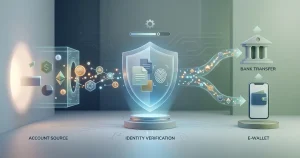
The starting point is the source of the deposited funds. A casino records how money entered the account and may use that information when deciding how to return a balance. UK anti-money laundering rules generally require payouts to go back to the original payment source. This is often called a closed-loop arrangement: funds are returned through the route associated with the deposit, rather than sent wherever the customer chooses.
That does not mean every payment method handles deposits and withdrawals in precisely the same way. A method may be deposit-only, or a casino may support it for deposits but use another route for payouts. The cashier’s description of a deposit option therefore does not, by itself, establish how a withdrawal will be handled. The relevant detail is the casino’s stated process for the particular method and account.
For someone considering an e-cheque deposit at a UK casino, the practical question is whether the payment route also has a defined role in withdrawals. If the cashier presents e-cheques only as a way to fund an account, do not assume that a later payout will be sent back by e-cheque. The casino may explain that withdrawals follow the original source, use another supported route, or require further checks before an alternative can be considered. The available arrangement depends on the casino’s rules and the transaction.
Casinos That Accept eCheck in the UK
A simple flow helps make the distinction clear:
- You choose a deposit route and send funds to the gambling account.
- The casino records the source associated with that deposit.
- When you request a withdrawal, the casino applies its payout rules, including any closed-loop requirements.
- The funds are returned through the permitted route, or the casino asks for additional information if a different route is proposed.
The important point is that the route selected at the first step can constrain the later steps. A deposit option may be usable while still failing to match the payout arrangement you expected. If you assume that every deposit method offers a matching withdrawal route, you may discover the difference only when requesting a payout.
Returning funds to the original source is also a common anti-fraud and anti-money laundering control. It helps connect a withdrawal to the payment that funded the account. Where a return to that source is not possible, or you ask to use an alternative, the casino may require additional verification. That is not the same as saying an alternative will always be refused; it means the alternative may involve checks before the casino can authorise it.
This is why the words used in a cashier matter. “Deposit” identifies money entering the account; it does not necessarily describe the route out. Look for separate information about withdrawals, original-source returns and what happens if the original method cannot receive a payout. If that information is unclear, ask the casino to explain the exact flow before you make the deposit. A general statement that a payment method is supported may not answer the question.
Transaction Flow
Step 1: Deposit
You choose a deposit route and send funds to the gambling account.
Step 2: Recording
The casino records the source associated with that deposit.
Step 3: Withdrawal Request
When you request a withdrawal, the casino applies its payout rules, including closed-loop requirements.
Step 4: Funds Return
The funds are returned through the permitted route, or additional information is requested if a different route is proposed.
The same principle applies if you use more than one deposit route. The casino may need to consider the sources recorded on the account when processing a withdrawal, rather than treating the balance as detached from its payment history. Do not infer that you can choose a new payout destination simply because it is available elsewhere in the cashier. The casino’s rules determine whether that route can be used for this withdrawal and whether it triggers further checks.
For a casino that appears to offer e-cheque deposits, the useful test is therefore not just whether the deposit button is present. Establish whether the casino describes a withdrawal path for that deposit, whether payouts are expected to return to the original source, and what verification may be needed if the route cannot be used. That gives you a clearer picture of the full transaction, from funding the account to receiving an approved withdrawal, without assuming that deposit access guarantees a matching payout option.
Comparing payment routes without assuming one is best
A payment route cannot be ranked by a single fee label. The total cost may be made up of separate charges at different points: the casino may apply a transaction fee, the payment provider may charge for its service, and your bank or card issuer may add a charge of its own. If a transaction involves currency conversion, an exchange-rate spread can also affect the amount received. A network fee may apply to some routes as well. These costs do not necessarily appear together or under the same name.
A specialist payment-method review describes these as possible components of payment costs, not a fixed charge that applies to every transaction. The practical question is therefore not simply which method advertises “no fee”. It is what the complete transaction costs for the payment route, account and amount you intend to use.
Total payment costs may include separate charges from the casino, the payment provider, your bank or card issuer, network fees, and exchange-rate spreads.
Separate the charges by who applies them
Start with the casino’s cashier and payment terms. Check whether the casino states a charge for making a deposit or receiving a withdrawal. Then check the payment provider’s terms: a casino’s description of a route does not establish what the provider or your bank may charge separately.
Your bank or card issuer is another distinct part of the calculation. Its charges depend on the account and transaction, so a casino’s fee information cannot answer that part for you. If the route involves a payment network, network costs may also contribute to the total. Avoid treating a fee shown by one party as a complete statement of the cost.
For a useful comparison, record each potential charge separately:
- the casino’s stated charge;
- the payment provider’s charge;
- any charge from your bank or card issuer;
- any exchange-rate spread;
- any network cost.
A charge may be absent, included in another price, or disclosed by a different party. If a component cannot be established from the terms available to you, do not assume it is zero. Treat it as something to confirm before proceeding.
Compare the same transaction
A comparison is meaningful only when you hold the transaction constant. Assess the routes for the same intended amount and the same direction of payment. A deposit and a withdrawal may involve different charges, so a route that appears inexpensive for one should not automatically be treated as inexpensive for the other.
For each route, add the charges that apply to that transaction. Where a cost is expressed through an exchange rate rather than as a separate fee, include the difference created by that rate in the comparison. A visible flat charge can look larger than a route with no displayed fee, while the latter may still have costs elsewhere. The displayed charge alone does not settle which route costs less overall.
This is why there is no universal lowest-fee payment method. The answer depends on the actual amount and on the charges attached to that particular transaction. A route can compare favourably under one set of conditions and less favourably under another. A ranking that ignores the provider, bank, conversion and network components leaves out parts of the calculation.
Casinos That Accept Tether in the UK: What to Check
Use a like-for-like checklist
Before choosing between routes, check whether each cost is stated by the casino, the provider or your bank. Then identify which charges apply to the transaction you are considering, rather than relying on a general claim about a payment method. If the terms do not make clear whether a stated fee covers the whole route, ask the relevant provider or casino to clarify it.
Keep the comparison focused on total cost, not on one prominent figure. A route with no casino charge may still carry a provider or bank cost; a route with a stated charge may have fewer other costs. Neither description establishes the final result by itself.
The same method applies when comparing an e-cheque with another payment route: do not infer that it is cheaper, or more expensive, from its name or from a single advertised fee. Compare the charges that apply to the transaction as a whole. That gives you a reasoned basis for choosing without assuming that one payment method is best for every customer or situation.
Payment costs and account currency
A displayed fee is only one part of the cost of a deposit. If the casino account, payment service and bank account use different currencies, a conversion may occur as the money moves between them. The exchange rate can include a spread: the rate applied to the transaction may be less favourable than a reference rate, creating a cost that is not shown as a separate fee. A specialist review notes that this spread can exceed a visible flat charge, so comparing only the fee line can give an incomplete picture.
Attention: Currency conversion spreads can sometimes exceed a visible flat charge, meaning comparing only the fee line may give an incomplete picture of the cost.
Check which currency the casino account will use before making a first transaction. A specialist review reports GBP support on the pages it examined, but that does not establish the currency setting for every account or payment route. Confirm the currency shown in your own account and cashier. If the account is not in pounds, a deposit in pounds may be converted; the payment provider or bank may also apply its own conversion rate or charge.
The important point is to identify where any conversion happens. The casino may process the payment in one currency, while your bank or payment provider settles it in another. If more than one party converts the amount, the final debit can differ from the amount initially displayed. Check the transaction currency and any exchange-rate information shown before confirming, then review the provider’s terms for charges that may be applied outside the casino cashier.
For an e-cheque route, do not infer its currency treatment from the method’s name. The cashier’s displayed amount and currency, together with the provider’s terms, are what determine whether conversion is involved. If those details are not clear, pause rather than treating a stated flat fee as the full cost.
Keeping the casino account and payment route in GBP, where both support it, can avoid a currency conversion between those two parts of the transaction. It does not prove that no other charge applies, since the payment provider or bank may still have its own terms. Compare the amount leaving your account with the amount credited, and account for any conversion rate as well as any separately listed fee.
Deposit minimums and limits depend on the method
A deposit minimum is the smallest amount a payment route will accept for one transaction. It is separate from the maximum the casino or payment provider will allow. The two figures can differ between methods, so a minimum shown for a card does not establish the threshold for an e-cheque or another route.
Casinos That Accept MuchBetter in the UK
A specialist review reports minimum deposits in the £10–£20 range, with the amount depending on the selected method. Treat that as a reported range, not a fixed UK-wide rule: the applicable minimum is the one stated for the account and transaction you are making. Do not infer an e-cheque minimum from the figure for a different payment option.
Maximum deposits can be set per transaction, per day or per month. These are distinct controls. A per-transaction ceiling limits one payment; a daily or monthly ceiling can restrict the total accepted across multiple payments during that period. The permitted amount can also depend on the payment method and account status. A limit available to one account therefore does not necessarily apply to another, even at the same casino.
Before choosing an amount, identify which limit applies to the transaction and which applies to cumulative deposits. If you are near a daily or monthly ceiling, splitting a payment may not help: the total can still be restricted by the relevant period limit. Likewise, a payment provider may impose its own cap alongside the casino’s limit, so the lower applicable ceiling can determine what goes through.
For e-cheques, do not rely on a generic limit quoted for another method or assume that an e-cheque transaction has the same threshold as a bank transfer. No particular e-cheque minimum or maximum should be treated as established without a current figure that applies to your account. Check the displayed amount limits and the payment method’s terms before entering a deposit. If the stated minimum exceeds the amount you intended to deposit, or the maximum is below it, revise the amount only after confirming the applicable limit; repeated attempts do not change the underlying restriction.
Understanding Deposit Limits
Minimum deposits are the smallest amounts a route will accept, while maximums can be set per transaction, per day, or per month. These limits can vary between different payment methods and individual account statuses.
The practical comparison is therefore about the amount you can actually submit, not a headline limit detached from the method and account. Keep the transaction within the smallest relevant cap, and distinguish a single-payment limit from any cumulative deposit restriction.
Keep payment ownership details consistent
The casino account and the payment route should identify the same customer. When the name or other basic account details differ, the operator may need to establish who controls the funds before processing a transaction. Matching details reduce the chance that a straightforward payment is held for an avoidable ownership check.
This matters whether you are considering an e-cheque or another cashier option. If an e-cheque appears as a choice, check that the account and payment details you would use belong to you and match the information registered with the casino. The label alone does not establish that the operator will accept a payment with mismatched ownership details.
A practical way to keep the records clear is to use one named account consistently for deposits and withdrawals, where the cashier permits that route for both. Each additional account or payment route can create another set of details for the operator to compare. That does not mean every difference will cause a problem, but it can make the transaction harder to reconcile.
Before submitting a payment, compare the name on your casino account with the name attached to the payment method. Also check that you have entered the relevant account details correctly. If you have changed your name or use a payment account with different registered information, resolve the discrepancy with the casino before sending funds rather than assuming it will be accepted.
Casinos that accept Neteller in the UK: payments
Consistency is not a guarantee that a payment will be approved. The operator may still ask for information to confirm account ownership, and the payment method must be available for your account and transaction. But using details that point to the same customer removes one preventable source of friction.
For a player looking at e-cheque casino payments in the UK, the useful test is therefore not just whether a payment label appears. Consider whether the route can be used in your own name and whether its account details align with your casino profile. A single, clearly identified route is easier to trace than a collection of accounts with different ownership details.
Why a withdrawal may take longer than a deposit
A deposit and a withdrawal pass through different steps, so the time taken for one does not predict the other. A specialist review describes a card deposit as potentially instant while the related payout may take several business days. The deposit can reach the casino without the same approval process required before money is released.
For a withdrawal, the casino first has to process the request internally. It may also need to complete account verification, particularly before approving a first withdrawal. Until those steps are finished, the payment has not necessarily been sent to the payment provider or bank. Any time taken after release is separate from the casino’s own processing.
A deposit’s speed describes how quickly funds reach the gambling account, whereas a withdrawal involves internal casino processing and account verification before funds are released.
This distinction matters when you compare a fast deposit option with a withdrawal estimate. The deposit time describes how quickly funds reach the gambling account; it does not establish how quickly a withdrawal request will be reviewed or paid. A cashier’s payment-method label also cannot, by itself, tell you how long the casino’s approval stage will take.
When checking withdrawal information, look for the stated processing time and whether it refers to casino approval, transfer to the payment service, or the full journey to your account. These are different stages. If the estimate is unclear, ask the operator which stage it covers and whether completing verification first would affect processing.
A delay does not necessarily mean that the payment route is unavailable. It may reflect an outstanding review or incomplete verification rather than a problem with the method itself. Treat the deposit and withdrawal timelines as separate pieces of information, and do not assume that an instant deposit means funds will be available just as quickly after a withdrawal request.
Casinos That Accept USDC in the UK: Payment Guide
Payment checks that help prevent avoidable payout problems
A withdrawal request can be delayed while the casino checks the account and approves the payment. A specialist review notes that both the operator’s internal approval process and whether your account is fully verified affect withdrawal speed. This means the payment route alone does not determine when funds are released.
Before requesting a payout, make sure the details on your gambling account are accurate and that you have completed any KYC checks the casino requires. If the operator needs information to confirm your identity or account, the review may not be complete until you provide it. Check the account messages or cashier for requests rather than assuming that a submitted withdrawal is already approved.
Casinos may also return funds to the original payment source. This is a common anti-fraud and anti-money-laundering control: it helps connect a payout with the person and route involved in the deposit. If you ask for a different destination, the casino may need additional verification before it can approve the payment. That can add a separate check even where the alternative route appears in the cashier.
Casinos That Accept Boku in the UK: What to Check
This matters when considering e-cheques as well as other payment methods. The presence of a method does not establish how a casino will process a later payout, or whether it will accept a different destination without further checks. Do not assume that an e-cheque has a particular security feature or bypasses the casino’s controls. Read the withdrawal terms and follow the operator’s instructions about verification and payment destinations. These checks clarify what the casino needs to approve a payout; they do not guarantee a particular processing time.
Check current payment options before making a deposit
A payment method shown in a review or on a general information page is not proof that it is available to you now. A specialist payment review lists Visa and Mastercard, but the cashier is where you can check whether either is currently offered to UK customers and whether your particular card product is eligible. A brand name alone does not establish that every card bearing it will work.
Casinos That Accept Interac in the UK
The same point applies when you are looking for a UK casino that accepts e-cheques. A search result or an old payment list can describe an option that is no longer presented, or that is not available for your account. Treat those references as prompts to check, not as confirmation that you can make a transaction.
Before depositing, sign in and open the casino’s cashier. Check the methods displayed for your account and read any eligibility notes before selecting one. If a method appears but the transaction is declined, do not assume that the payment route is available to every customer or usable for every transaction. The cashier’s current options are more relevant than a generic list, but the presence of a method still does not guarantee that a particular attempt will be accepted.
Keep the distinction clear: a payment method can be named by a casino or review without being available in your circumstances. Confirm the option at the point you intend to use it, and do not deposit on the assumption that a label on a page guarantees access.
Why must withdrawals return to the deposit method?
Returning funds to the original payment source is a common anti-fraud and anti-money-laundering measure. Using the same payment route for deposits and withdrawals can also reduce avoidable transaction checks.
What is the fastest withdrawal method for UK casinos?
PayPal, open banking and debit cards linked to fast payout systems are generally among the quickest options. Your payout can still take longer if the casino needs to approve it or verify your account.
Which method has the lowest fees?
There is no universally cheapest method. Compare casino and provider charges, your bank’s fees, any currency-conversion spread and network costs for the amount you plan to pay.
Are Visa and Mastercard deposits definitely debit cards?
No. Check the card product and its eligibility in the casino cashier; seeing Visa or Mastercard listed does not confirm that every card is a debit card or is currently available to you.
Why can a fast payout casino still delay my withdrawal?
A casino must approve the withdrawal before it is sent, and first withdrawals can take longer while verification is completed. An unverified account can also slow processing.
What is the current minimum deposit?
Minimum deposits usually start at £10–£20, depending on the payment method. Check the cashier for the minimum that applies to your chosen route.
Do UK casino withdrawals require verification?
Verification may be needed, particularly for a first withdrawal. The casino’s approval and verification checks can affect how quickly your payout is processed.
Luna Casino Payment Methods in the UK
Luna Casino Withdrawals: Methods, KYC and Cashout Checks
Luna Casino withdrawal A Luna Casino withdrawal can depend on two things before the payment...

Anonymous Crypto Casinos in the UK: How They Work
A practical look at Bitcoin payment stages, withdrawal conditions, identity checks and the risks of...

BNB Casino Comparison in the UK: Licensing and Payments
BNB payment support does not establish a casino’s UK licence or confirm which games and...

Bitcoin Cash Casino Comparison in the UK
Great Britain’s regulator requires remote operators serving its market to hold a licence, while UK-licensed...

Cardano ADA Casino Comparison for UK Players
The guide explains Great Britain’s licensing requirements and the limits of evidence about Cardano deposits,...

Credit Card Casino Sites in the UK: What the Rules Allow
UK-licensed casinos cannot take credit cards for gambling, so payment terms and the purpose of...

UK Casino Sites That Accept Debit Cards
See how a debit-card deposit moves from your bank through payment systems to your casino...

Casino Sites That Accept EcoPayz in the UK
EcoPayz’s rebrand to Payz can affect the label shown at checkout, while casino support for...

Casino Sites That Accept Jeton in the UK
Jeton support depends on the casino’s cashier, while account details, withdrawal checks and bonus terms...

Casino Sites That Accept Skrill in the UK
See how cashier options, payment routes and account compatibility can affect using Skrill at a...

Casinos That Accept Apple Pay in the UK
Apple Pay, Boku and other Pay-by-Mobile options are separate methods, and support for one does...

Casinos That Accept AstroPay in the UK: What to Check
Availability depends on the payment options shown in the account cashier, while bonus terms, deposit...

Casinos That Accept Bank Cheques in the UK
A bank cheque is a banking instrument, while Boku charges deposits to a phone bill...

UK Casino Bank Transfers and Pay-by-Phone Deposits
Boku uses mobile billing or prepaid phone credit, while a bank transfer moves money directly...

Casinos That Accept Bitcoin in the UK: How to Check
Bitcoin and Bitcoin Cash support, bonus conditions, account controls and withdrawal processes all require separate...

Casinos That Accept Boku in the UK: What to Check
Boku availability is narrowing, and phone-payment options may be replacements rather than Boku itself. Why...

Casinos That Accept CashtoCode in the UK
CashtoCode availability, bonus eligibility and withdrawal support are separate checks at an online casino. How...

Casinos That Accept Citadel in the UK: How to Check
A cashier listing is the clearest account-specific confirmation; general payment pages and search results do...

Casinos That Accept Click2Pay in the UK: What to Check
Click2Pay availability must be confirmed in the casino cashier, and deposit access does not guarantee...

Casinos That Accept ClickandBuy in the UK
Availability can vary by casino and account, so the signed-in cashier is the practical place...

Casinos That Accept Debit Cards in the UK
Understand how card deposits work, how debit cards differ from other payment routes, and what...

Casinos That Accept Diners Club in the UK
A card must be supported by both the casino and the payment route before funds...

Dogecoin Casinos in the UK: Payment Checks
A look at what casino cashiers reveal about crypto support, and why a general cryptocurrency...

Casinos That Accept E-Wallets in the UK
Learn how casino cashiers handle e-wallet deposits and withdrawals, what affects payment timing and why...

Casinos That Accept eCheck in the UK
A casino’s general payment listing is not confirmation; the cashier shows which options apply to...

Casinos That Accept EntroPay in the UK: How to Check
Payment availability can vary by account, and deposit and withdrawal routes may not match. How...

Casinos That Accept Ethereum in the UK: What to Check
Casino payment options can vary by operator and account, so the cashier is the practical...

Casinos That Accept Giropay in the UK: How to Check
Giropay availability depends on the options shown in the account cashier and may not apply...

Casinos That Accept Google Pay in the UK
Google Pay availability, promotion terms and withdrawal routing are separate checks, alongside account currency, limits...

Casinos That Accept iDEAL in the UK: Payment Guide
Learn how to verify cashier availability, account currency, deposit conditions and whether bonuses or withdrawals...

Casinos That Accept InstaDebit in the UK
Availability can vary by account and currency; cashier checks also help clarify bonus eligibility, withdrawal...

Casinos That Accept Interac in the UK
A casino may accept a payment route while an offer excludes it, so payment availability...

Casinos That Accept Klarna in the UK: How to Check
A casino’s payment list may be broad; the signed-in cashier shows whether Klarna is selectable...

Casinos That Accept Litecoin in the UK: What to Check
Litecoin availability confirms a funding route, not access to every game or eligibility for a...

Casinos That Accept Maestro in the UK: Deposits
Maestro availability can depend on the transaction, while slot access and promotions follow separate casino...

UK Casinos That Accept Mastercard: Debit Card Rules
Mastercard acceptance depends on card type and casino cashier rules; this guide explains deposits, limits...

Casinos That Accept MiFinity in the UK: Payment Guide
Learn how to verify cashier support, check bonus terms, and distinguish deposit acceptance from withdrawal...

Casinos that accept Monzo in the UK: payment guide
Boku uses a mobile account rather than a Monzo balance, with availability, limits, withdrawals and...

Casinos That Accept MuchBetter in the UK
Casino cashier availability and bonus terms are separate checks, while withdrawals and payment controls also...

Casinos That Accept Neosurf in the UK: Payment Guide
Neosurf availability depends on the casino’s payment-provider arrangements and the methods shown for an account....

Casinos that accept Neteller in the UK: payments
Neteller acceptance can vary by casino and account, while bonus rules may separately exclude deposits...

Casinos That Accept Pay N Play in the UK
The guide explains how Boku deposits work, why operators have replaced or removed the service,...

UK Phone-Bill Casinos: How Boku Deposits Work
Boku charges a deposit through the mobile network, with access and limits tied to the...

Casinos That Accept POLi in the UK: Payment Guide
Understand how casino cashiers, promotion terms and payout routes affect using POLi to fund an...

Casinos That Accept Revolut in the UK: What to Check
Card acceptance depends on the casino’s current options, the specific card product and the issuer’s...

Casinos That Accept Ripple XRP in the UK
An XRP deposit is a funding route, while slot access, game mechanics and bonus terms...

Casinos That Accept Siru Mobile in the UK
Siru Mobile is distinct from Boku and Fonix, and a casino’s current cashier is the...

Casinos That Accept Solana in the UK: How to Check
A Solana mention is not proof of support: the cashier and the operator’s payment terms...

Casinos That Accept Tether in the UK: What to Check
Tether availability can vary by account and cashier, so confirm the payment route, network, and...

Casinos That Accept Ukash in the UK: What to Know
See how prepaid deposits compare with other options, and what to check in a casino’s...

Casinos that accept Upaycard in the UK: deposits
A successful card deposit does not guarantee bonus eligibility, and withdrawals may not return to...

Casinos That Accept USDC in the UK: Payment Guide
USDC availability depends on the cashier’s listed options and account, not simply on a casino’s...

Casinos That Accept Visa in the UK: Deposits & Bonuses
A casino may accept Visa for deposits without making it eligible for every promotion or...

Casinos That Accept WebMoney in the UK
Regulatory status and payment availability are separate checks, alongside considerations for bonuses, slot play and...

Casinos That Accept Wire Transfers in the UK
Bank payments can use manual transfer details or an open-banking service, with different processes for...

Casinos That Accept Wirecard in the UK: What to Check
A card option in the cashier does not confirm that a specific Wirecard product is...

Casinos that accept Zimpler in the UK: payment guide
Availability depends on the payment options shown in the signed-in cashier, while deposit rules, verification...
Instant Bank Transfer Casinos in the UK: A Guide
Bank-transfer availability and steps can vary by operator and account, so the cashier is where...

iPad Casinos in the UK: Browser, Games and Payments
Browser behaviour, payment routes, game access and account checks all shape how casino play works...

Mobile Top-Up Casino UK: Deposits and Phone Billing
See how Payforit deposits are collected through a mobile account and how phone billing compares...

Online Casinos That Accept SMS Deposits: UK Guide
The guide distinguishes SMS authorisation from mobile-account billing and explains availability, limits, network support and...

Pay by Mobile Casinos UK: Deposit Guide
Pay-by-mobile funds a casino account; it does not unlock particular slots or change their rules....

Pay by Phone Bill at UK Casinos: How It Works
Payforit routes a mobile casino deposit through a phone number, charging either a later contract...

Pay by phone casinos UK: deposits explained
The guide follows the Payforit confirmation flow and explains how phone-bill funding differs from casino...

Payforit Mobile Casinos UK: How Deposits Work
The payment flow starts in the casino cashier, then uses an SMS code sent to...

Casinos That Accept Direct Banking: UK Payment Guide
See how bank-authorised payments work, what to check in casino cashiers, and why deposit speed...

TRON (TRX) Casino Comparison for UK Players
The guide distinguishes TRON as a payment asset from gambling services and explains what can—and...

UK Crypto Casinos With No KYC: Rules and Risks
The guide distinguishes UK-licensed gambling from offshore access and outlines BCH payment, cashout, bonus and...